· 9 min read

🔶 Platform

Highlights

🎧 Flexxible Remote Assistance (FRA) en Portal. La asistencia remota se puede ejecutar desde la vista de Workspaces y Sesiones; además, cuenta con dos nuevas características.

📩 Automatic license expiration notifications. Anticipate license expirations with email alerts, helping avoid service interruptions and aiding proactive management.

⏱️ Scheduling actions in workspace groups. Define recurring actions across multiple devices from a single configuration, simplifying the automation of periodic tasks and reducing operational complexity.

📡 New session view. Provides immediate visibility on active sessions in managed devices.

🔍 Quick search for sessions and devices. Quickly access any session or device from the search bar using the Ctrl + K shortcut.

New Features
  • Flexxible Remote Assistance en Portal. Ahora la asistencia remota se puede ejecutar desde la vista de Workspaces y Sesiones. Además, se han añadido dos nuevas características:

    • Seguridad simplificada. Esta funcionalidad permite reducir el tiempo necesario para iniciar una sesión de asistencia remota entre un 50 % y un 85 %.
    • FRA desatendida silenciosa. Permite realizar asistencias remotas desatendidas sin mostrar en pantalla que se está realizando una asistencia.
Improvements

🔶 FlexxAgent Cross-Platform (Windows)

🎯 New version

FlexxAgent Cross-Platform version 26.01.501.201 for Windows is now available, including hotfixes (patches) for issues detected in version 26.1.501.197.

Resolved Issues:

  • The same application crash can be reported multiple times during the agent lifetime.
  • Printed pages calculation accumulates previous printed pages incorrectly.
  • Closed connections which are retained as TIME_WAIT by Windows with PID 0 are reported as connections with latency from the [system process] but should be discarded.

Applied Fixes:

  • Ensure application crashes are only reported once when they occur.
  • Correct printed pages calculation to avoid accumulating pages from previous prints during agent liifetime.

📝 Documentation

🔶 FlexxAgent Cross-Platform (Linux)

🎯 New version

FlexxAgent Cross-Platform version 26.03.501.199 for Linux is now available.

This version represents a qualitative leap in:

  • Overall agent stability
  • Reliability in system and user actions
  • Accuracy and consistency of metrics
  • New functional capabilities (Web Apps and log collection)
  • Installer robustness and dynamic configuration
  • Session and microservice management
New Features
  • Web Apps support, allowing monitoring of web applications via the browser extension for Chrome and Edge.
  • Unification of the system and session agent into a single executable.
  • Remote log collection from FlexxAgent via Portal.
Improvements
  • Greater overall stability and continued operation of reports.
  • Optimized session management, especially in Ubuntu environments with multiple user sessions and greeters.
  • Greater robustness in the installation and update process of FlexxAgent.
  • Optimized dependency handling in the FlexxAgent update process even without apt connectivity.
  • Incorporation of proxy support during the update process.
  • Optimized RAM memory consumption of FlexxAgent.
  • Adjustments in package versioning on Linux to avoid inconsistencies during agent updates.
  • Notifications: priority order in multiple notifications, acceptance management, display of long texts, and greater stability.
  • Support for scheduled notifications.
  • Optimization of the communication system between the system agent and the session agent.
Bug fix
  • Resolved power actions that might not work under certain circumstances, ensuring shutdown and session disconnect operations work correctly in specific multi-user environments.
  • Errors in sending operation completion mark resolved.
  • Fixed an issue in RAM consumption reporting during session.
  • Corrected an error where microservice execution did not properly report script output to the backend.
  • Resolved issues with multiple simultaneous surveys.
  • Fixed incorrect data in the initial session agent report.

🔶 FlexxAgent Cross-Platform (macOS)

🎯 New version

FlexxAgent Cross-Platform version 26.04.502.204 for macOS is now available.

This version represents a qualitative leap in:

  • Overall agent stability
  • Accuracy and consistency of metrics
  • Installer robustness and dynamic configuration
  • Session control improvements
New Features
  • Unification of the system and session agent into a single executable.
  • Remote log collection from FlexxAgent via Portal.
Improvements
  • Greater overall stability and continued operation of reports.
  • Session management optimization.
  • Reduced resource consumption.
  • Greater robustness in installation and update process.
  • Notification optimization: prioritization of multiple notifications, acceptance management, long text visualization, and stability improvements.
  • Support for scheduled notifications.
  • Optimization of communication system between system agent and session agent.
Bug fix
  • Errors in sending operation completion mark resolved.
  • Fixed incorrect data in the initial session agent report.
  • Errors in survey visualization corrected.

🔶 FlexxAgent

🎯 New version

  • La versión 26.4.1 de FlexxAgent ya está disponible.
Improvements
  • Gestión de errores al conectar con IoT Hub optimizada para reducir fallos relacionados con la conexión y mejorar las capacidades de diagnóstico.
  • Nuevo ajuste para limitar el número máximo de filas exportadas a Excel, evitando exportaciones excesivamente grandes y reduciendo el uso de memoria.
  • La combinación Ctrl + Alt + Del está disponible para asistencias remotas atendidas en el modo Simplificado.
  • Activada la actualización automática (AutoUpdate) de FlexxAgent en Linux y macOS para mantener los agentes actualizados automáticamente.
  • Añadida una nueva región de Analyzer (west-eu-04) para mejorar la capacidad y reducir la latencia para clientes en Europa Occidental.
  • Detección mejorada de sesiones dinámicas para identificar y clasificar mejor los tipos de sesión.
  • Optimización del rendimiento del procesamiento de mensajes del agente sobre las ejecuciones de los microservicios, reduciendo la latencia y la carga de procesamiento.
  • Flexxible Remote Assistance ahora admite archivos de contraseña con extensión .FLXRA para simplificar la gestión de credenciales en las sesiones.
  • Se ha incorporado Flexxible Tools a los flujos de trabajo de las sesiones de asistencia remota desatendida, permitiendo a los técnicos acceder a herramientas durante esas sesiones.
Bug fix
  • Corregida la programación de Wake on LAN (WoL) en dispositivos intermedios para que las tareas se ejecuten según lo esperado.
  • Resuelto un problema por el cual Flexxible Tools fallaban cuando la asistencia remota se iniciaba desde Portal.
  • Las tareas de WoL registraban como propietario a VDIWorkerDesktopOperationsService en lugar del usuario que ejecutaba la acción; ahora la propiedad se registra correctamente.
  • Ya no se crean tareas duplicadas de ejecución de flujos durante la ejecución de los mismos.
  • Los cambios de parámetros de FlexxAgent ahora se guardan de forma inmediata, en lugar de esperar al procesamiento completo del mensaje de build, reduciendo la latencia en la configuración.
  • Analyzer:
    • Los valores de tiempo de foco reportados por encima de los umbrales esperados (muy superiores a 300 segundos) se corrigen para evitar métricas infladas.
    • Los valores AFK (away-from-keyboard) reportados por encima de 300 segundos se corrigen para evitar informes de inactividad engañosos.
    • Las ejecuciones de EUM (End-User Monitoring) podían expirar en dispositivos con proxy pero sin acceso a internet debido a la falta de validación de certificados; este problema de timeout ha sido corregido.
  • Corregido un error en el script de creación del service bus que anteriormente provocaba fallos durante el aprovisionamiento.
  • Optimizada la carga de InstalledApps para mejorar el rendimiento y reducir los tiempos de carga en inventarios grandes.
  • La alerta Machines whose FlexxAgent was automatically repaired ahora identifica qué máquina se ha visto afectada, permitiendo a los operadores actuar sobre el host correcto.
  • Los resultados de la asistencia remota ahora se reportan a Portal con mayor rapidez para mejorar la visibilidad de los resultados de las sesiones.
  • Resuelto un problema en el que el mensaje emergente de asistencia remota no indicaba la conexión de un segundo operador en modo desatendido; ahora el mensaje refleja múltiples operadores.
  • Cuando dos sesiones de Anydesk se conectaban a la misma sesión, solo se mostraba la notificación del primer técnico; ahora el sistema indica múltiples técnicos conectados.
· 9 min read

🔶 Platform

Highlights

🖥️ Unified DaaS management from Portal. New centralized administration of virtual environments (machines, desktops, catalogs, delivery groups, sessions, and templates) from a single interface with complete operational control.

🔗 Automation with Webhooks. Real-time integration with external systems using automatic HTTP notifications for platform events.

🤖 AI-driven reports. Instantly generate custom reports from natural language descriptions, no technical knowledge needed.

⚙️ More flexible and precise alert configuration. You can now adjust alert severity and exclude them from the WRI calculation.

🗂️ Enhanced organizational context for devices. New visibility of Workspace Groups directly from the device detail to simplify operational analysis and segmentation.

🧹 Mass device removal. More agile and efficient management in cleanup and maintenance tasks through batch deletion.

Portal

🚀 New Features

  • DaaS. New unified management capability for virtual environments enabling administration of virtual machines and desktops, catalogs, delivery groups, sessions, and templates from a single control center. Facilitates monitoring of global status, resource optimization, and execution of operational tasks, reducing the complexity of managing this type of infrastructure.

  • Webhooks. Allows platform-generated events to be integrated with external systems through configurable HTTP notifications. Each event can trigger automatic actions in third-party tools, enabling advanced automation scenarios.

  • Create with AI - Reports. Generate custom reports from natural language requests. AI interprets the query, analyzes the data, and returns results in table format with the possibility to:

    • Refine queries through additional requests
    • Export to CSV
    • Save as reusable report
    • Schedule automated runs
    • Send results by email

🔨 Improvements

  • New tab Workspace Groups in the device detail view to identify its organizational membership.

  • From Alert Configuration you can now:

    • Edit the severity level of an alert.
    • Exclude alerts from Workspace Reliability Index (WRI) calculation.
    • Assign a minimum threshold of 60 minutes for logging event activation.
  • Mass device removal is allowed from device removal.

  • Possibility of hiding marketplace visibility from sub-organizations.

Workspaces

🔨 Improvements

  • Displaying the host FQDN during microservices execution to enhance traceability.
  • New column Free system disk in the devices list.
  • Greater clarity in device deletion task text, making the action and origin explicit.
  • Automatic error logging when attempting to run an unregistered microservice in Workspaces to facilitate diagnosis.
  • Viewing the execution window of final user microservices.
  • Jobs created from flows configured as Detection only are no longer marked as system jobs, improving their classification.
  • Export limit to Excel of 10,000 records to improve platform stability.
  • End-user microservices execution window.
Bug fix

This version includes an improvement in stability and state consistency, highlighting:

  • Wake on LAN (WoL) scheduling jobs now send to Portal with the correct tenant property for the workspace group.
  • Installation of FlexxAgent on versions above the allowed upper limit is prevented.
  • Corrected Flexxible Remote Assistance operator behavior that incorrectly marked some reopened dynamic sessions as attended and prevented reconnection.
  • Corrected reporting errors in session microservices jobs.
  • Resolved an error in dashboards view: Object reference not set to an instance of an object6.
  • Corrected an error when opening server and VCC role details caused by an incorrect path in the ComplianceResult property.
  • Corrected the agent's first send totals calculation, which could reference an incorrect device.
  • Re-enabled Disconnect and Logoff actions from Portal to work correctly.
  • Prevented overwriting all custom fields when a microservice updated only a subset of them.
  • Mitigated potential CSV injection in exported data through prior value sanitization.
  • Reduced delays in Wake on LAN (WoL) retries when using multiple intermediate devices.
  • Corrected startup behavior in environments with different time zones to ensure proper scheduling and state.
  • Flow messages use the language configured by the user.
  • Corrected incorrect switch to not-reporting status for devices powered off the next day.
  • Resolved empty log messages generated by compliance checks to ensure meaningful information in logs.
  • Ensured correct order of events by ensuring OperationsAudit receives the job creation message before the device creation notification.
  • Corrected cases where a Wake on LAN (WoL) job ended in Error, but the final device status was displayed as On.
  • WoL scheduling now displays the intermediate device configured from the workspace or reporting group.
  • Handled Wake on LAN (WoL) scheduling cases where no intermediate device is found to prevent unexpected failures.
  • Ensured correct status update of associated devices from in progress to completed when jobs finish correctly.
  • Corrected the visibility of the Accept button in the notification bar when the message exceeds the screen width.
  • Corrected titles of jobs for user flows and microservices executed by the universal agent.
  • Jobs that automatically change reporting groups now correctly update device status upon completion.
  • PatchOS jobs are now visible for the selected tenant and correctly displayed in Portal.
  • Resolved an object reference error when forcing compliance checks.
  • Scheduled microservices originated from Flows now include the target device in the created job.
  • Normalized all date/time fields to UTC across the platform to ensure timestamp consistency (not limited to emittedAt).
  • Corrected compliance filter to return accurate results.
  • Scheduled jobs for flows and microservices now include an Operation Name when created for future execution.
  • Restored correct management of Event Hub connection string for integrations with FXXOne.
  • Reduced time needed to disable the alert Multiple errors in event log.
  • Corrected Select all behavior to meet user expectations.
  • Corrected marking devices as completed in restart and forced restart jobs when they finish successfully.
  • Managed absence of Chrome executable to prevent unhandled System.IO.FileNotFoundException errors.
  • Improved FlexxAgent autostart to tolerate longer initialization times and prevent failures when startup is delayed.
  • The taskstatus API endpoint now returns expected fields even in jobs that finish with errors.
  • The job Install Intel EMA agent now correctly reports installation failures instead of ending as Complete when the agent is not installed.
  • Notification dates are now normalized and consistently displayed across the platform.
  • Restored the visibility of the owner field in the job list.

🔶 FlexxAgent Cross-Platform (Windows)

New Flexxible agent

FlexxAgent Cross-Platform version 26.1.501.196 for Windows is now available.

New Features
  • End-user microservices execution window.

  • Agent logs from Portal. Now the device detail view allows seeing which logs this agent has left during its installation.

  • Support for detection of UDS as broker.

Improvements
  • Internal performance optimizations and reduction of resource consumption.
  • General stability, resilience, and fault tolerance improvements.
  • Inclusion of remote assistance type in reports.
  • Extension of CustomFields support.
  • Script reporting executed in microservices within Flows and end-user microservices.
  • Optimization of the reporting system through sending differentials, reducing the volume of data sent.
  • Improvement in error control and management in metric sending.
  • Avoid domain calls when using local users in domain-joined workspaces.
  • Blocking of agent update or restart operations during active remote assistance sessions.
  • Inclusion of detailed log information for remote assistance sessions.
  • Microservices with partial errors now correctly notify the operation as an error.
  • Improvement in retrieval of user-directed notification translations.
  • Optimization of pending patch queries.
  • Automatic recovery of the previous agent configuration in case of corruption detection.
  • Recovery of the agent from backup if the original executable has been deleted.
  • Use of HTTP/2 in backend communications.
Bug fix
  • Incorrect information sending to backend during restart operations that could remain in Pending state resolved.

  • ⚠️ Missing detailed list information in some operation responses.

  • ⚠️ Notifications may remain visible to users after their defined end date.

  • Improved sorting of notifications by severity.

  • Corrected background color, blinking, and hand cursor type in notifications.

  • Added support for scheduled notifications.

  • Corrected a behavior where popup notifications did not always close automatically after 3 days.

  • Improved agent startup on devices with very limited resources.

  • Corrected incorrect hypervisor detection on AVD machines.

  • Resolved an issue where BIOS version could display an incorrect value.

  • Adjusted Wake on LAN data reporting for wireless networks.

  • Fixed duplicate logon time reporting.

  • Resolved an error when updating the agent while the executable was in use.

  • Fixed an issue where some antivirus appeared duplicated in Antivirus details and their version was not reported.

  • Adjusted the installer to generate a random temporary name.

  • Fixed the flow logging, which was not correctly deleted under certain situations.

  • Corrected an incorrect message when executing a flow successfully.

  • Resolved the behavior where the session agent could be blocked if the installation process took a long time.

  • Corrected a behavior where not all processes were closed on agent termination.

  • Solved an issue where Get All PnP Devices returned only devices with errors instead of all devices.

  • Resolved the reporting of the Product in the list of installed applications.

  • Fixed incorrect values in AfKTime and FocusTime under certain situations.

🔶 FlexxAgent

🎯 New version

  • FlexxAgent version 26.2.1 is now available.
Improvements
  • Ensuring mass reboot jobs do not leave devices in timeout state when the reboot completes correctly.
  • For scheduled Wake on LAN (WoL) and shutdown operations, the workspace group's name is included for more context.
  • Avoid using a VCC role as an intermediate machine in Wake on LAN operations.
  • Ensure Wake on LAN (WoL) jobs finish with complete details of results and status information.
  • Detection time for updates reduced from 10 to 2 minutes.
  • Greater resilience on startup: a failure in a single subprocess doesn't impede the complete agent start.
· 4 min read

🔶 Platform

Highlights

🔐 SSO with SAML for secure, integrated corporate authentication with identity providers.

📊 New Operations section with greater visibility, advanced filters, and specific support for Wake on LAN.

🔔 Notifications to end users during microservice execution, with customizable messages.

🕵️‍♂️ More comprehensive auditing, with complete visibility of actions taken in Portal.

⚡ Optimized Wake on LAN, with flexible device configuration by report group.

Details

🚀 New Features

  • SAML Authentication. Full support has been added to configure authentication via SAML, a single sign-on (SSO) technology that allows organizations to integrate their corporate identity manager with the Flexxible platform and delegate the login process. This feature includes the verification of organizational domains, the creation and management of SSO connections from Portal. With this feature, users of associated domains can easily authenticate using their corporate credentials, and administrators have the option to configure SCIM provisioning.

  • New Operations section. A new section dedicated to Operations management has been added, providing a more complete and detailed view of all actions performed on the organization’s devices. Includes filters, improved status information, and greater detail per task. Additionally, scheduled Wake on LAN operations are incorporated, showing relevant information about scheduled remote startups, for more efficient monitoring and management.

🔨 Improvements

  • Microservice Execution Notifications. The option has been added to notify the end user when a microservice starts and finishes its execution. Administrators can configure custom messages for the start and completion (successful or error), which will be shown to the user via notifications in the Windows bar.

  • Default Reporting Group. The ability to define the reporting group that will be used by default to download FlexxAgent in the organization is incorporated.

  • Description Field in Reporting Groups. It is now possible to add a description to the reporting groups, facilitating their identification and management.

  • Full visibility of events in Audit. The Audit section is expanded to show all events related to actions that a user can view and manage in the Portal. Previously only events of certain entities were recorded.

  • Devices for Wake on LAN (WoL) in report groups. Allows defining up to three devices for automatic wake-up execution via Wake on LAN (WoL) in selected report groups, improving the flexibility and reliability of this functionality.

Bug fix
  • The sending of duplicate OperationsAuditUpdate messages during bulk operations has been corrected, avoiding the generation of repeated audit entries.
  • Fixed a null reference error (Object reference not set to an instance of an object) that occurred when requesting pending patches, preventing information retrieval in some cases.
  • Improved notification of jobs that expire due to timeout, ensuring their status is correctly reported in Portal.
  • Fixed an issue where some flows were received with the microservice OperationName instead of the expected operation identifier, avoiding incorrect labeling of operations.
  • Fixed a behavior where certain flows arrived with OperationName set as system, improving correct operation classification in Portal.
  • Fixed the sending of Wake on LAN operation completion events to Portal, preventing jobs from indefinitely remaining in In Progress status.
  • Corrected errors in the sending of operations to Portal, improving delivery and telemetry.
  • Improved the individual execution of microservices in certain scenarios, ensuring their correct execution.
  • Fixed an issue that prevented some users from viewing the Flexxible Remote Assistance menu, restoring access to support functionalities.

🔶 FlexxAgent

🎯 New version

  • FlexxAgent version 25.12.1 is now available.

🔨 Improvement

  • Optimization of Wake on LAN information. Visualization and management of Wake on LAN operations from the Operations section have been improved, facilitating access to detailed information on the status and result of automatic wake-ups. This enhancement allows much faster and more efficient tracking of operations, significantly reducing the time needed for incident diagnosis, especially in executions affecting a large number of devices.
· 8 min read

🔶 Platform

Highlights

Audit. From this new section, you can see the log of all actions performed by users on the Portal entities.

📊 Diagnosis. Analyzes resource consumption of a device (CPU, RAM, GPU, Network, and Disk) by user, date range, and applications, with interactive charts for more precise diagnostics.

🧱 Removal of archived microservices. You can now delete microservices that are not active or associated with workflows.

🖥️ Advanced detection of connections in Flexxible Remote Assistance. Tasks reflect operator activity in real-time, automatically recording start, end, reconnections, and auto-close.

🔎 Configurable search pattern. Ability to define which device attribute the regular expression will apply to: full name, description, organizational unit, and current subnet.

⏱️ Increased API timeout. To improve stability in data-heavy environments.

🌐 Flexible Wake on LAN configuration. Now available at the report group level.

🧾 Agent message log. Messages are now logged for increased traceability.

⚙️ Force update custom fields in backend. The action is processed in the backend to prevent blockages.

🧠 New fields in API. flexxibleMID and EDR added for more context.

🧩 Access name in API jobs. Now API jobs show the access name.

🕓 Service Bus error diagnostics. Diagnostic information improved.

📊 Log of FlexxAgent flows and microservices. Now logged as jobs in Workspaces.

🔒 Security improvements in Analyzer. Includes revocation of a compromised AES key.

Details

Portal

🚀 New functionality

  • Audit. Portal has incorporated the ability to log all actions of creation, modification, or deletion performed by users on currently auditable Portal entities: User, User Configuration, and Tenant.

🔨 Improvements

  • Diagnosis. From a device's detail view, you can see the analysis of resource consumption (CPU, RAM, GPU, Network, and Disk), based on application usage and system processes during a user's session.

    This feature allows you to select the user, date range, and view an interactive chart with details per time period.

  • Delete a microservice. Allows deletion of archived microservices, provided it is not active on any tenant and not assigned to any flow.

  • Fishing pattern field. You can now define the device attribute on which the regular expression defined in the search pattern will be applied: Full Name, Description, OU, and Current Subnet.

  • Simultaneous flow request processing is supported to improve performance and responsiveness.

Workspaces

🔨 Improvements

  • Flexxible Remote Assistance

    • Connection Detection. The functioning of the remote assistance work log has been improved to accurately reflect the actual activity of operators. Previously, a job was completed when the link to download the .flxra file appeared on the operator's screen. or .exe.

      Now, the system detects and records all relevant information in the job details, including the circumstances of job closure and reconnection.

    • Sensitive data protection. In unattended remote assistance, operator sensitive information (like photo and username) is hidden to protect privacy.

  • Compatibility of popup notifications with Windows Home editions has been added.

  • Performance optimization when filtering by workspace groups with a large number of items.

  • Improved sub-organization management for workspace groups, simplifying multi-client workflows.

  • Increased reliability of job submissions from Workspaces to Portal.

  • The API timeout has been increased to reduce errors in environments with very large datasets.

  • The Force update custom fields action is now processed in the backend to avoid client-side timeouts and improve reliability.

  • The flexxibleMID field has been added to the crowstrikedetections API endpoint to provide additional context in detections.

  • An EDR field has been added to the device API endpoint to expose the endpoint protection status.

  • Jobs initiated via the API now display the API access name in the job details, improving the traceability of automated actions.

  • When a connection error with Service Bus occurs, the error message now suggests checking to ensure the device clock is correct, aiding in diagnosing time sync issues.

  • Flows and microservices run by FlexxAgent Universal are now logged as jobs in Workspaces for consistent operational visibility.

  • The API and Swagger documentation has been improved to provide clearer guidance for developers.

Analyzer

🔨 Improvement

  • Avoid showing the user the agent configuration window when an internal error occurs at startup.
Bug fix
  • The error The parameter is incorrect in attended remote assistance flows has been resolved.

  • The Select all action in paginated or filtered tables now works correctly when using complex fields as filters.

  • Applying a workspace group filter along with equality conditions in complex fields no longer results in failures or leaves jobs in a Pending state.

  • Notifications are now sent in batches of 500 devices, and subsequent batches are correctly initialized for processing.

  • The Force update custom fields job no longer blocks when there is no microservice configured for CustomFields.

  • Running get pending patches or get installed patches no longer causes the web interface to become unresponsive.

  • Device domains now appear correctly in the table for assignment to tenants.

  • CrowdStrike is now appropriately detected as an antivirus/EDR product.

  • The antivirus details view no longer shows duplicate entries for detected products.

  • Running a System type microservice no longer produces the error Object reference not set to an instance of an object.

  • Popup messages in sessions work correctly when pagination is applied.

  • The job execution details for microservices now correctly show the time log instead of incorrect UTC hours.

  • The Auth0 info field was removed from the Workspaces connection log table to avoid unnecessary data exposure.

  • The BIOS version field now reports the correct value.

  • Pending patch counts have been corrected so that the number of missing patches matches the actual status.

  • The Save button no longer erroneously appears in the connection log detail view.

  • The UnitOfWork column no longer appears where it does not belong in connection log lists in Workspaces.

  • The unexpected error when requesting a Flexxible Remote Assistance session that previously returned An unexpected error occurred has been resolved.

  • The report group listing has been corrected to show the appropriate fields and values.

  • Build version numbers displayed for Windows 10 / Windows Server 2016 or later have been corrected.

  • The Total login duration field in the session detail pivot table in Workspaces no longer shows random decimal values.

  • The Uncategorized category for microservices is now translated correctly in Workspaces when changing the default language.

  • The listing of workspace groups now remains correctly sorted after saving.

  • Text search now works for microservices created from Portal.

  • Server shutdown operations now complete correctly.

  • Connection logs without an associated session are now deleted as expected, preventing the accumulation of obsolete information.

  • Forcing the update of custom fields after selecting a set of devices now generates a job correctly.

  • Agents that were not reporting their capabilities are now correctly recognized, allowing actions to be executed on them.

  • The error Nullable object must have a value when attempting to disconnect multiple sessions has been resolved.

  • Differential reports from FlexxAgent are correctly sent to Workspaces again, preventing unnecessary bandwidth usage.

  • WoL job execution details now appropriately show the time log instead of incorrect UTC hours.

  • The WoL process no longer marks devices as pending to turn on when they are already on.

  • Threads for CreateUserNotificationRecipient and SendNotification no longer remain active continuously.

  • The method InsertUpdateCrowdStrikeDetection no longer throws the error Object reference not set to an instance of an object when the tenant has CrowdStrike alerts not linked to PCs/devices.

  • PCR7 configuration is no longer reported as Binding possible on devices without TPM.

  • The agent now correctly reports the operating system version.

  • A null reference error in the compliance component that could generate exceptions under certain conditions has been resolved.

  • Errors related to sending operations to Flexxible have been fixed, including:

    • Session log messages in mass sessions (disconnect, log off, etc.) are now assigned only to one device.
    • Automatic OS update actions now appear with OperationName or RemoteOperationExecute.
    • When executing a microservice via the API, workspaceIds are now assigned correctly.
    • Operation UpsertWorkspaceGroup.

🔶 FlexxAgent

🎯 New version

  • FlexxAgent version 25.10.1 is now available.

🔨 Improvements

  • Intermediate or relay Wake on LAN (WoL) devices can be configured at the report group level, providing more flexible network wake-up strategies.

  • Additional context is added when the WoL process cannot turn on a device, and translations of messages that were not being properly localized have been corrected.

  • Agent messages sent to Workspaces are now logged in log files for better diagnostics and traceability.

· 10 min read

🔶 Platform

Highlights

🛡️ Extended antivirus information. Details are shown when a device has multiple antivirus programs installed.

🔧 Microservices. New predefined categories and option to clone microservices between sub-organizations.

🗂️ Reorganized portal. Clearer menu with Information, Products, and Modules sections.

Optimized flows. New sidebar menu and increased minimum reuse time for greater stability.

📊 More flexible workspaces groups. Support for devices without FlexxAgent and more agile filters.

🔍 Faster searches. Better performance in event logs and jobs within Workspaces.

🛡️ CrowdStrike. Updated integration with the Alerts endpoint (API updated) and a 40% faster threat collection.

🔧 Improved API. Expanded documentation, strict validation, and search fixes.

📋 Jobs with more accurate statuses. Errors in shutdown and Wake on LAN statuses have been fixed.

👥 Mass actions. Pop-ups, disconnections, and log offs in a single batch job.

Details

🚀 New functionality

  • More information on devices with multiple antivirus installed. In the Security tab of a device’s detail view in the Workspaces module, a new field showing additional information appears when more than one antivirus is installed, helping identify and prevent conflicts between security solutions. These data are also available as a column in the views of Workspaces and Servers.

🔨 Improvements

  • Predefined categories in microservices. Allow defining classification categories for microservices. This helps maintain consistency and avoid the creation of random or duplicate categories.

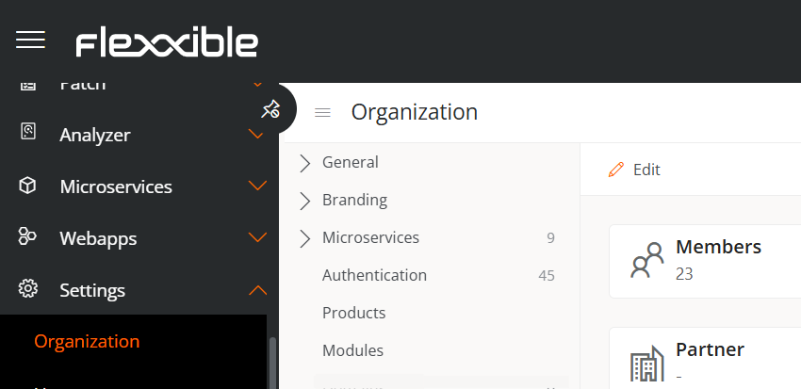
  • Reorganized Portal menu. The Information, Products, and Modules sections are now found in Portal -> Settings -> Organization, within the tabs: General, Products, and Modules.

new-menu

  • Clone microservices in sub-organizations. Sub-organizations have the option to clone the microservices created in their environment to the main organization.

  • Improved flows

    • New format. A left sidebar menu has been added to facilitate access to all functionalities.

    • New cooldown minimum time. The minimum value has increased from 1 to 10 minutes, providing greater control and stability in flow execution.

  • Static workspaces groups without agent. Static workspaces groups can now include devices that do not have FlexxAgent active.

  • Filter optimization. Filters by workspaces groups and installed applications in the workspaces module have been improved for more agile use.

  • CrowdStrike

    Transition to Alerts. The integration has been adapted to changes in the CrowdStrike API, using the Alerts endpoint instead of Detections, which is now obsolete.

    Better performance. Threat detection collection is now 40% faster. And they are collected completely and without delay, even with a very high volume of logs.

    Greater data consistency. The displayname field in detections now always contains valid information, preventing it from appearing empty.

  • Optimized searches

    • In the Event Log list of the Workspaces module, searches and filters are faster and more efficient.
    • In the Jobs section of the same module, record query performance has been improved.
  • API improvements. Documentation now includes details of the fields returned by each endpoint. Additionally, inconsistencies were fixed where numeric fields returned "" (empty string) instead of null when no values were available.

  • DeviceManagerEntries API endpoint fixes for startswith/endswith functions.

  • Stricter parameter validation in API. Previously, if an API call included a non-existent parameter, the system ignored it and executed the query, this could cause issues (e. g., writing filer instead of filter). Invalid parameters are now validated correctly, returning a 40X error instead of unexpected results.

  • Status updates for scheduled shutdown jobs. Previously, jobs were marked as Completed with errors when some machines were already shut down, causing confusion. Now the job ends as Completed.

  • Status updates for Wake on LAN jobs. Previously, jobs were marked as Completed with errors when some machines were already shut down, causing confusion. Now the job ends as Completed.

  • Bulk support for pop-up, disconnect, log off, and force log off actions. Multiple actions are now grouped into a single bulk job, simplifying execution at scale.

Bug fixes

  • Fixed an issue where alert thresholds remained linked to the former tenant after a change.

  • Fixed the ability to add networks from other tenants to Locations. There is now a restriction preventing cross-assignments between tenants.

  • Fixed an issue that prevented marking notifications as attended on devices outside the domain.

  • Resolved a security vulnerability in notifications. If a notification was sent with JavaScript code, it could execute when accessing the Workspaces menu after expiring. The risk has already been eliminated.

  • Fixed a translation error when removing messaging services.

  • Fixed an issue where workspace group updates included null elements.

  • Fixed an incorrect state in remote assistance jobs when the screen closed before receiving the AnyDesk ID.

  • Optimized operation execution with overall performance and stability improvements.

  • Fixed an error that automatically changed the report group with the same title as another modified by a user, making differentiation difficult.

  • Fixed the ReportingGroup endpoint, which did not correctly apply groupby/aggregate.

  • Fixed an issue in the notification detail view on a device, which incorrectly opened navigation.

  • Fixed inconsistency in public IP information between different machine views.

🔶 FlexxAgent

Highlights

FlexxAgent version 25.9.1

🔎 UDS brokers detection. More visibility and filters.

🌐 More compatible Wake on LAN. Supports UDP 7 and UDP 9.

Improved performance in device screens with notifications.

🐞 FlexxAgent in diagnostic mode. New Agent trace logging with automatic deactivation after 24 hours.

Details about this version

🚀 New functionality

  • UDS Detection. FlexxAgent now also recognizes UDS brokers. This enables filtering of devices by type of broker, improving visibility and simplifying both management and troubleshooting.

🔨 Improvements

  • Wake on LAN with greater compatibility. The Wake on LAN process also includes UDP port 9, in addition to the already supported UDP port 7. This ensures greater compatibility with different devices and network configurations.

  • Improved performance in workspace screen with notifications enabled.

  • FlexxAgent debug mode for diagnostic purposes. New diagnostic mode in FlexxAgent to help troubleshoot issues. Renamed 'Session analyzer trace logging' to 'Agent trace logging' because this option enables trace logging for FlexxAgent too collecting event log events every minute. The trace logging is automatically deactivated after 24 hours.

Bug fixes

  • Fixed an error in power actions on Azure virtual machines after the agent starts. Power commands now work correctly after initialization.

  • Resolved the “Access Denied” error during some installations.

  • Fixed an installation failure of FlexxAgent when the expected path did not exist.

  • Resolved an issue where microservice condition-based flows stopped executing if FlexxAgent started without a network connection.

  • Fixed an error where the FlexxAgent installation job failed, even though the installation was successful.

  • Resolved an issue where installed applications did not report all existing applications.

  • Fixed an issue where pop-up messages did not fail when an error occurred.

  • Corrected language discrepancy in pop-up messages that did not match the user's configured language.

  • Solved an error where virtual machines running on Hyper-V over Windows were detected as physical devices.

  • Fixed detection of remote PCs with Parallel RAS, which were not correctly identified.

  • Fixed a bug in the detection of the Flexxible Remote Assistance (FRA) form after a reconnection in attended remote assistance that sometimes prevented the connection even after accepting from the target device.

  • Fixed an issue where remote support tools could run before the user accepted in attended sessions.

  • Fixed an issue in unattended remote assistance notification. If the process closed or the user ended it, the notification did not reappear.

  • Resolved an issue in workspace group creation, where the required name field was not validated.

Highlights

FlexxAgent Universal version 25.8.501.179

Web Apps on Windows. FlexxAgent now supports the Web Apps feature in Windows environments.

Performance Boost. Several internal improvements reduce resource consumption and optimize overall speed.

🛡️ Better Stability. Fixed issues with remote assistance sessions, notifications, and reporting of system metrics (apps, processes, CPU, etc.).

🔒 Improved Reliability. Stronger error handling in Flows, IoTHub connections, and agent updates.

📊 Clearer Insights. Enhanced logs, antivirus detection, and reporting accuracy across devices.

⏱️ Longer API timeout to improve stability in environments with large amounts of data.

🌐 Flexible Wake on LAN configuration at the report group level.

🔒 Security improvements in Analyzer and revocation of compromised AES key.

🧾 Agent messages are now logged for better traceability.

⚙️ The action Force update custom fields is processed in backend to avoid blocks.

🧠 New flexxibleMID and EDR fields in the API for more context.

🧩 API jobs show the access name.

🕓 Better diagnostics in Service Bus errors.

📊 FlexxAgent flows and microservices are registered as jobs in Workspaces.

Details about this version

🚀 New functionality

  • Web Apps support in Windows. FlexxAgent now supports the Web Apps feature on Windows operating systems.

🔨 Improvements

  • Multiple internal performance and resource consumption optimizations.

  • Backend URL is now used as the primary point to download FlexxAgent updates.

  • Improved detection of session agent and closed sessions.

  • Improved token expiration handling in connections to Analyzer.

  • FlexxAgent diagnostic and error information is now sent using backend URL.

  • Added detection of Hyper-V hypervisors in Windows 10 and Windows 11 virtual machines.

  • Improved pre-loading of modules in PowerShell microservices.

  • Improved log messages for antivirus detection in Windows Server when information is unavailable.

  • Improved log messages in Flows evaluation and execution.

  • Improved logging during installation and update processes.

  • Reduced FlexxAgent log retention period.

  • Better handling of remote assistance exceptions when a workspace is shutting down.

  • Reduced log verbosity and improved controls for IoT Hub reconnections during FlexxAgent startup.

  • Default proxy now set to HTTP if no protocol is defined in agent configuration.

  • Added additional status information for attended remote assistance sessions.

Bug fixes

  • Solved an issue where long device names may be truncated when reported to the backend.

  • Fixed an issue where the session agent might not restart automatically after 24 h.

  • Solved punctual internal agent communication errors in Flows.

  • Improved popup reliability.

  • Fixed an issue where the remote assistance window did not appear in a second dynamic session.

  • Fixed an issue where the Accept/Reject buttons in remote assistance did not always appear.

  • Solved an issue retrieving hard disk information via WMI.

  • Corrected reporting of the printed pages metric.

  • Fixed an issue where not all installed apps were being reported properly.

  • Fixed timeout errors executing custom conditions in flows.

  • Fixed timeout errors calculating custom fields.

  • Fixed control issues when reconnecting to IoT Hub with a pre-existing connection.

  • Fixed error in Health checker process validating FlexxAgent’s certificate.

  • Solved an issue where old FlexxAgent logs were not removed from the disk.

  • Fixed incomplete reporting of Windows process information.

  • Corrected reporting of number of logical processors.

⚠️ Known Issues

  • Restart operations may not send proper status information to backend and could remain marked as “pending.”

  • Missing detailed list information in some operation responses.

  • Notifications may remain visible to users after their defined end date.

  • Pop-up notifications may not close automatically after 3 days as expected.

· 3 min read

FlexxAgent version 25.6.1 🎯 is now available. This update incorporates a new functionality based on artificial intelligence, along with many improvements focused on optimizing the user experience, especially in Portal.

New functionality

🚀 Create with AI. Artificial intelligence has been integrated into the microservices design process in Portal. This functionality allows streamlining the creation flow compared to the manual process, as code can be generated automatically without requiring advanced programming knowledge or immediately configuring the README description and content.

Improvements

🔨 Permission update. The roles L3 Engineering Team and L3 Read-only Engineering Team now have read-only access to the sections Tenants, Activation, Alert Settings, Updates, Product, Integrations, Modules, Policies, Report Groups, and Magic Link.

🔨 Microservices folder. You can rename the local folder that stores the microservices enabled for end-user execution.

🔨 Filter in Installed Applications. The action menu in the Installed Applications table, in Portal, now allows filtering records using the options With installations or Without installations.

🔨 Bulk enabling of microservices. You can now enable or disable microservices in bulk for selected tenants and suborganizations.

🔨 Alert settings. It is now possible to edit the Severity, Threshold, and Authorized Time fields in the Alert Settings section of Portal.

🔨 Microsoft Updates. Now you can manually or automatically approve or reject non-catalogued updates detected on tenants' devices.

🔨 Dynamic Workspace Groups Configuration. The option to modify the name and description of these groups from the Portal has been added.

🔨 Event Log. If the user has access to more than one tenant and selects All tenants in the organization selector, they will only be able to see the events logged on the current day and not the monthly history.

🔨 New fields. In the General tab of a device's details in the Portal, the Area, Department, and Office fields are now included, if available.

🔨 vPro Port. It is no longer necessary to use port 8080 to access the URL https://iagent.flexxible.com for vPro. Port 443 is maintained.

🔨 Download FlexxAgent for Linux and Mac. Now it's possible to download the configuration file needed for installing FlexxAgent on Linux and Mac devices directly from the Reporting Groups section in the Workspaces module.
· 2 min read

This month brings version 25.4.2 of FlexxAgent 🎯, which includes the features and improvements described below:

New Features

🚀 Authentication with email and password. A new authentication option has been added that allows, optionally, logging in using an email and password. This feature complements existing authentication methods (Microsoft Entra ID and Google), allowing users to select the one that best fits their needs.

🚀 Uninstallation protection. This feature allows to restrict the uninstallation of FlexxAgent, preventing users from automatically removing the agent from devices. The configuration of this protection can be done from the Product or Reporting Groups sections, according to the organization's requirements.

Improvements

🔨 Share specific reports. The Reports section allows sharing not only the most recent reports but also specific reports from previous dates. With this improvement, users can select and share reports generated up to two months ago, providing greater flexibility in managing an organization's historical information.

🔨 Access the history of installed applications. It is now possible to view the installation history of each version of an application from the Installed Applications section, in Portal. This improvement allows organizations to have greater control over the resource usage of their devices.

🔨 Batch delete users. To optimize the management of an organization, the option to delete users simultaneously has been enabled in the Users section, in Portal.

🔨 Import devices from suborganizations. The option has been enabled for an organization to import into a workspaces group those devices that are part of its suborganizations.

🔨 Modify alert thresholds. It is now possible to modify the time threshold that defines the trigger condition of an alert. The configuration can be done from the Alert settings section, Portal.

🔨 Active Directory (AD) group operations. Greater compatibility with Active Directory group operations across various tenants has been implemented, facilitating centralized management in such environments.

· 3 min read

This month brings version 25.4 of FlexxAgent 🎯, which includes two new sections in Portal, a new feature, and enhancements focused on strengthening security and optimizing platform usage.

New Features

🚀 Analyzer in Portal. You can now check information about the applications installed on devices and the licenses acquired directly from Portal.

🚀 Monitor in Portal. From this new section, you can view events that might affect the functionality of devices and customize predefined alerts according to each organization's needs.

🚀 FlexxAgent version selection. Organizations can now choose which agent version they want to use. This functionality is configured in Portal and applies to the reporting groups.

Improvements

🔨 New control to define cron-type flows. Besides using cron format strings and UTC time, it's now possible to define these flows graphically using a recurrence pattern and in the user's time zone.

🔨 Ability to change the report group for powered-off devices. When changing the report group of a powered-off device, the action will be scheduled and automatically applied when the device is turned on.

🔨 Antivirus detection. FlexxAgent extends the information obtained from a device's antivirus. Detection is automatic only on the Windows Client operating system (Windows 7 or later). On Windows Server, only Bitdefender and Windows Defender will be detected.

🔨 Audio redirection disabled during remote assistance. To protect user privacy, default audio redirection during remote assistance sessions has been disabled, preventing the operator from hearing conversations if the user is on a video call.

🔨 Second queue in Service Bus. A second queue has been introduced to prioritize operation responses over consumption reports. This ensures exceptional performance by assigning a dedicated queue to operations while maintaining the current queues dedicated to receiving reports from agents.

🔨 Integration with CrowdStrike. Portal's integration with CrowdStrike allows for the automation of security actions and improves response times, visibility, and protection in case of a potential vulnerability on devices.

🔨 Antivirus exclusions. Exclusions have been set in more restrictive environments to ensure a good user experience.

🔨 Centralized distribution of FlexxAgent on Chrome and Android. Deploying FlexxAgent on devices with these operating systems no longer requires the APK application format. It can now be installed from Google Play.

🔨 Collapsible menu. The option to collapse the Portal side menu has been added. Now users can pin or shrink it according to their preferences, thus optimizing screen space usage and enriching the navigation experience within the platform.

· One-minute read

This month brings new features and improvements.

New Features

🚀 Microsoft Update Directives. Allows the user to manage the approval or denial of updates from the Microsoft catalog on devices.

🚀 Search Bar. With this tool, a user can search for and go directly to certain sections and subsections of the Portal, or switch the organization to manage.

🚀 Reports. Reports based on relevant data from the organization's device fleet can now be generated and sent by email.

Improvements

🔨 New view of the Workspaces section in Portal. The Workspaces view has changed so that a user can consult, in addition to the device list of their organization, the details and status of each one of them.

· One-minute read

This month brings new features, improvements, and FlexxAgent version 25.2.

New functionality

🚀 Offline installation for Linux. The option to install FlexxAgent offline for devices with Linux operating system has been enabled.

Improvements

🔨 Dynamic remote assistance. Security in dynamic remote assistance sessions has been increased.

🔨 Proxy Settings. New proxy settings have been implemented for FlexxAgent Analyzer on Windows operating systems.

🔨 New font in Portal. The font type and size have been changed to improve the user experience.

🔨 Devices with the same name. Improvements have been implemented in the management of devices with identical names.

· 2 min read

This month brings new features, improvements, and version 25.1 of FlexxAgent.

New Features

🚀 Installed Applications. Provides a complete inventory of the applications installed on the devices, as well as version details, installation paths, binaries, and more.

🚀 Licenses. Allows grouping installed applications to create licenses, associate a cost, and measure their usage.

🚀 SAM. The new SAM dashboard helps optimize licensing costs for organizations by measuring license usage and suggesting savings.

Improvements

🔨 The new roles in Portal now allow granting users more granular access to the tools available in Portal.

🔨 Remote assistance now works in all its variants through a proxy, both authenticated and unauthenticated, on Microsoft operating systems.

🔨 The version 25.1 of FlexxAgent has been released, which is compatible with all the new changes and introduces performance improvements.

🔨 In the Entra ID workspace groups details view, the new Synchronizations tab is added, providing information about devices included and removed from the group, as well as synchronization times.

🔨 In organizations with sub-organizations, it is now possible to view, in the Activations section, the total sum of activations for the entire organization (including its sub-organizations), alongside the number of agents in the root organization.

🔨 Ability to deactivate or activate the auto-update of FlexxAgent in bulk for organizations with sub-organizations from the Reporting Groups section view.

🔨 Ability to include devices from sub-organizations in the report explorer when a customer has sub-organizations.

· 3 min read

This month brings the new version 24.10 of FlexxAgent for Mac and Windows and includes multiple new features:

New Features

🚀 Startup and shutdown scheduling of workspace groups

🚀 Fishing pattern

🚀 Entra ID Workspaces Groups

Improvements

🔨 Fullscreen mode for tables

🔨 In the Tenants and Activations sections list, clicking on a tenant's name selects the organization.

🔨 It is possible to create sub-organizations in customer-type organizations.

🔨 Organization admin users can now change the remote assistance settings.

🔨 New key combination Control + K + O to return to the main organization.

🔨 The delete button has been added in the Flows section.

🔨 Dynamic remote assistance has been implemented.

· 3 min read

This month brings new functionalities, various improvements, and version 24.9 of FlexxAgent.

New Features

🚀 New roles system for greater granularity and simplification of permissions in large organizations.

🚀 New activations feature in Tenants to assess the installation of FlexxAgent.

🚀 New end-customer tenant functionality or sub-organizations to structure the organization's data into several tenants more easily.

🚀 Release of version 24.9 of FlexxAgent, covering all the new features.

Improvements

🔨 New description field at the workspace level, enabling the introduction of data that helps identify it timely.

🔨 New ability to turn on and off devices for patching (Wake on LAN).

🔨 Collection of Windows installed, pending, and failed updates at the workspace level.

🔨 Collection of 28 new fields on Windows devices.

🔨 Optimization of 400% refresh time for flows and microservices (end-user remediations).

🔨 Implementation of sorting, filtering, and exporting to all tables.

· One-minute read

The following improvements have been made this month:

Improvements

🔨 Quick change of organization/tenant

🔨 Table optimization

🔨 Publication of new documentation